
.
Colm Doherty: You didn’t say anything to me. And you didn’t do anything to me.
Pádraic Súilleabháin: Well, that’s what I was thinking, like.
Colm Doherty: I just don’t like ya no more.
Pádraic Súilleabháin: You do like me.
Colm Doherty: I don’t.
Pádraic Súilleabháin: But you liked me yesterday...
.
Set on a fictional remote island off the coast of Ireland in the 1920s, the Banshees of Inisherin (2022) is a story about the loss of friendship and unfulfilled ambitions. Against the backdrop of incredible coastal scenery and lushly green Irish landscape, a beautiful friendship spanned over the years is destroyed in a matter of days as the story unfolds. The plot of the story is simple. And absurd. Colm Sonny Larry Doherty, a fiddle player and a lifelong friend of Pádraic Súilleabháin, one day decides, out of the blue, that he no longer wants to be friends with Pádraic anymore. What follows is a ridiculous yet heartbreaking conflict that disturbs the quiet of this small isolated community of Inisherin. But why doesn’t Colm like Pádraic anymore? What has he done to him?

While the film appears to be an allegory for the Irish Civil War, it is also a story that delves into the meaning of life and the passage of time. Feeling pressed for time, Colm suddenly feels the urge to leave a legacy behind. That is, his music. To him, this is even more important than being nice. ‘Niceness doesn’t last,’ he says to Pádraic, ‘music lasts, and paintings last. And poetry lasts…In 50 years’ time, no one will remember any of us.’
Pádraic, an easy-going and kind-hearted dairy farmer, disagrees. All he wants is to spend time with his friend, enjoying each other’s company. Yet Colm makes Pádraic feel like a nobody. He thinks Pádraic is not good enough for him. He is not worth his time. He’d rather spend time with everybody else, especially his talented musician friends, but Pádraic. He’d rather dance with his dog than talk to Pádraic. He sees Pádraic as an obstacle to his legacy. He decides to spend the remainder of his life focusing on creating a fiddle tune in the hope of being remembered after his death, and to that, he needs to cut Pádraic out of his life. Once and for all.
Siobhan: You can’t just all of a sudden stop being friends with a fella!
Colm: Why can’t I?
Siobhan: Why can’t ya?
Because it isn’t nice!
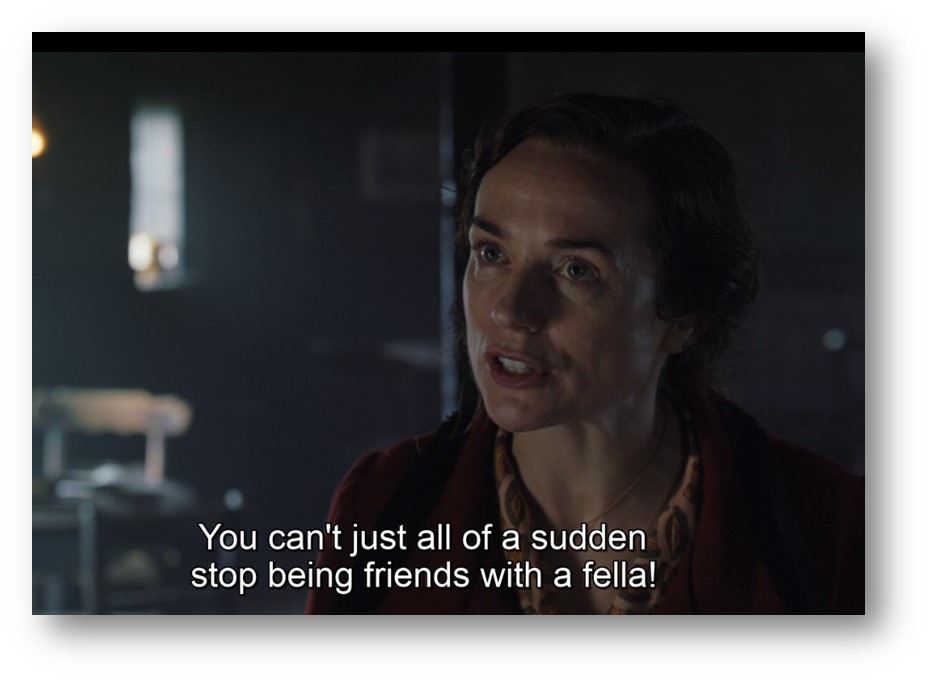
As German philosopher Ludwig Wittgenstein once described, the human mind is like a black box. You can never see into others’ boxes. You can never fully understand what’s going through the minds of others even if they tell you. Pádraic doesn’t understand why Colm doesn’t want to see him anymore. Neither does his sister Siobhan nor other folks in the village.
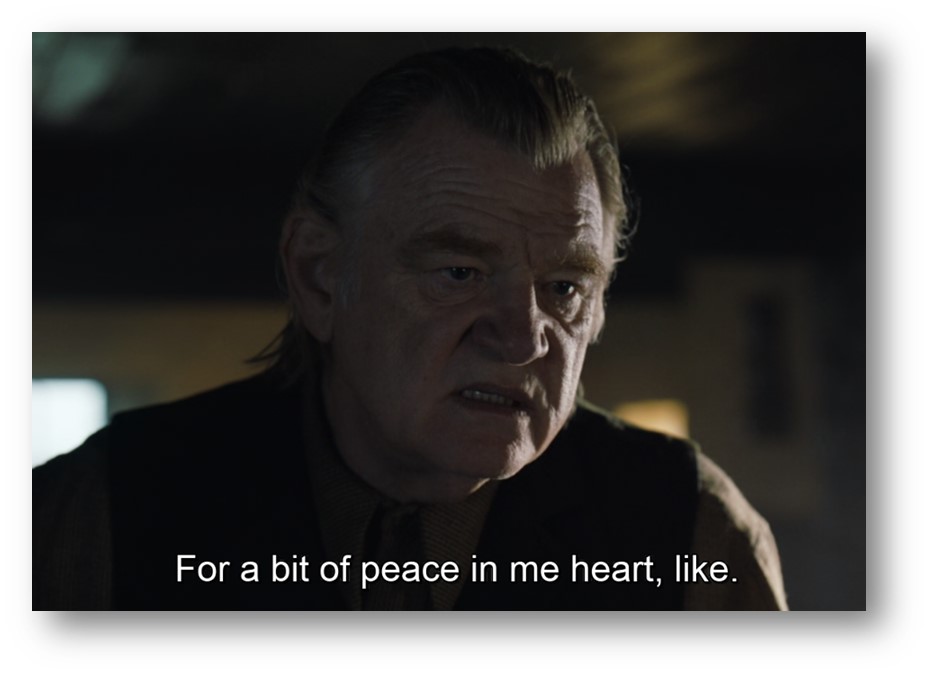
Colm: He’s dull.
Siobhan: But he’s always been dull. What’s changed?
Colm: I’ve changed. I just don’t have a place for dullness in me life anymore.
Siobhan: But you live on an island off the coast of Ireland, Colm. What the hell are you hoping for, like?
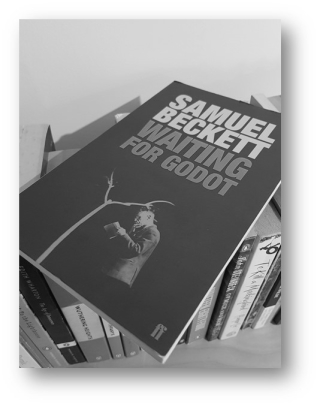
This film reminds me of Irish novelist and playwright Samuel Beckett’s most famous play, Waiting for Godot, a tragicomedy about two men, Vladimir and Estragon, waiting for someone named Godot who never comes. Both stories seem to revolve around the absurdity or purposelessness of life. We wait around doing nothing, or focusing on our unfulfilled ambitions or whatever lofty pursuits we may have, without realising that we are missing out on other things that matter to us – love, friendship…and niceness.
The need for companionship is centred in both stories. Colm and Pádraic are a bit like Vladimir and Estragon. Pádraic, who values friendship above all, despite being hurt and confused, keeps on going to the pub every day to find Colm who continues to ignore him. As for Vladimir and Estragon, they keep declaring they’ll leave yet they keep finding their way back to each other.
Estragon: Don’t touch me! Don’t question me! Don’t speak to me! Stay with me!
Vladimir: Did I ever leave you?
Estragon: You let me go.
Identity, loneliness and idleness seem to be the recurring themes in Irish literature. What is the point of it all, like? Decade after decade, century after century humanity continues to search for the meaning of life. If you asked Oscar Wilde, another great figure in the Irish literary world, he would tell you, life is a piece of art. It imitates art. ‘My life is like a work of art,’ he said.
Neither Banshees nor Godot exists. We do. Death is inevitable for everyone no matter whether you’re waiting for someone by a tree or writing a fiddle tune on a remote island. Despite all the nonsense that Colm said and did to keep Pádraic away, he’s right about one thing – art is the only thing that truly lasts. But that art is our life, a mark of eternity, not a fiddle tune.
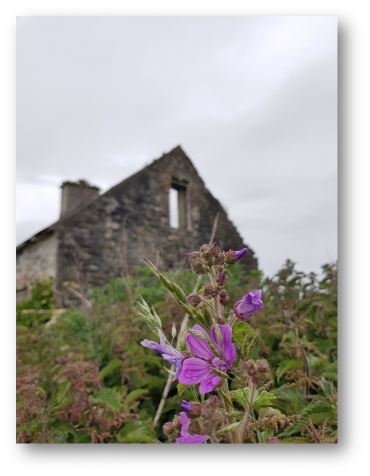
‘To become a work of art is the object of living.’
– Oscar Wilde
The film doesn’t tell us in the end Colm has left a legacy or not. Just like in Waiting for Godot, the issue centred on the story remains unresolved in the final scene. All we know is that he is the only one who cares about leaving a legacy. It is how he defines himself at that point in life. But for Pádraic, we can be certain it’s not Colm’s legacy he will remember, all he will remember is the day when Colm turned his face away, the day when Colm’s heart turned to stone, the day when love turned into hate…
**********
 Welcome to Crista's web